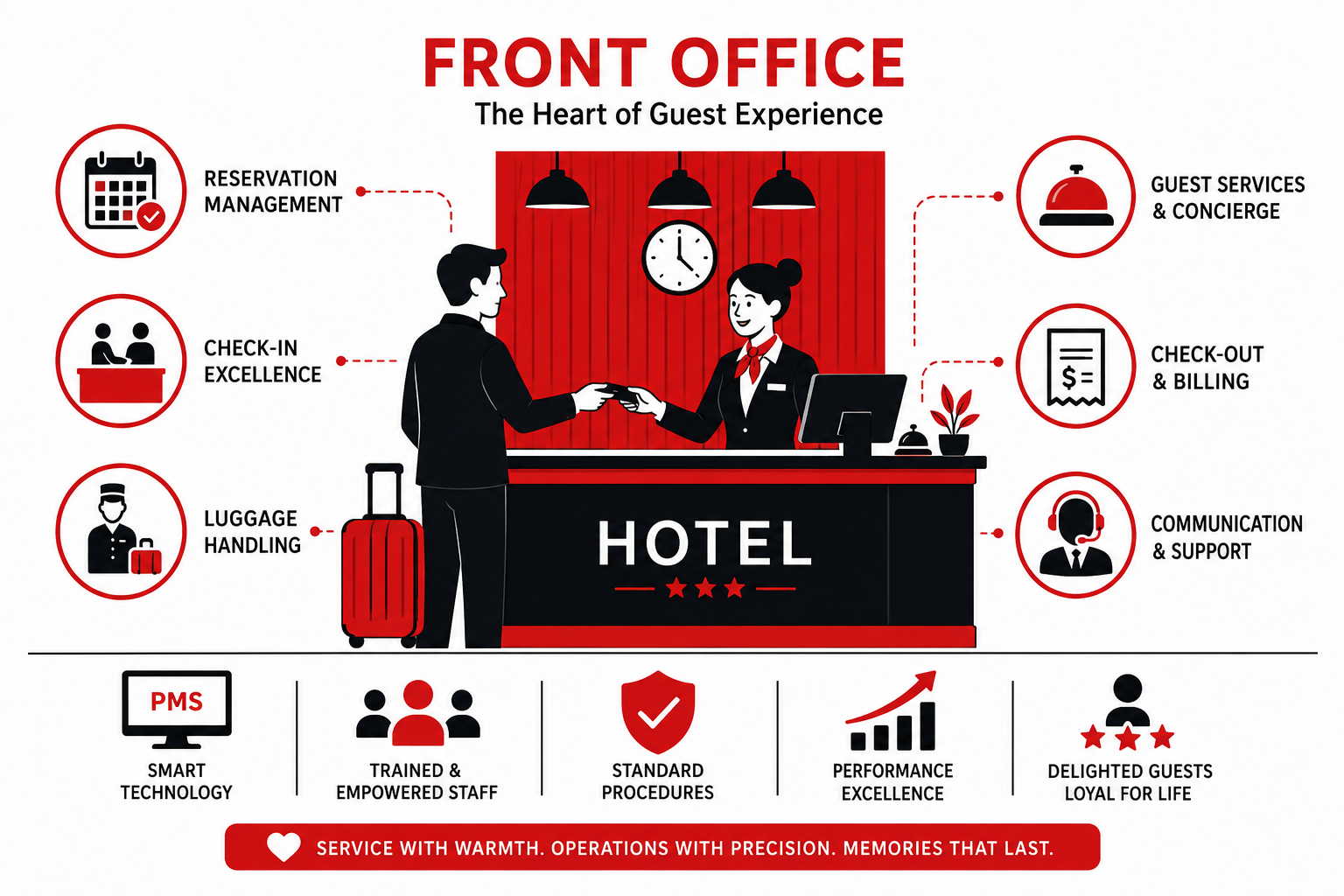
The front office is the beating heart of any hotel, serving as the central hub for guest interactions, operational coordination, and brand representation. It is often the first and last point of contact for guests, making it the most critical department in shaping the overall guest experience. A well-run front office ensures seamless check-ins, anticipates guest needs, resolves issues efficiently, and leaves a lasting positive impression that drives loyalty and direct bookings. This comprehensive guide provides a detailed, evergreen overview of front office operations, designed to educate hoteliers, managers, and staff on best practices, standard operating procedures (SOPs), and strategies for delivering exceptional service.
The Role and Structure of the Front Office Department
The front office department is responsible for managing all guest-facing operations from reservation to departure, ensuring a smooth and welcoming experience at every touchpoint. It acts as the nerve center of the hotel, coordinating with housekeeping, food and beverage, security, and maintenance to deliver cohesive service.
Key Sections of the Front Office
The department is typically organized into specialized sections based on function:
- Reception: Handles guest check-in, check-out, inquiries, and billing.
- Reservation: Manages booking requests via phone, email, website, and travel agents.
- Information Desk: Provides guests with local recommendations, transportation, and concierge services.
- Bell Desk: Assists with luggage handling, guest escorting, and valet services.
- Telephone Operator: Manages internal and external calls, wake-up calls, and message delivery.
- Front Office Manager (FOM): Oversees all operations, staff scheduling, training, and guest relations.
Each section plays a vital role in ensuring operational efficiency and guest satisfaction, with clear SOPs and communication protocols linking them together.
Core Functions of the Front Office
1. Reservation Management
The reservation process is the first formal interaction between the guest and the hotel, setting the tone for the entire stay. It involves:
- Booking Channels: Reservations are received through direct bookings (website, phone), online travel agencies (OTAs), global distribution systems (GDS), and corporate accounts.
- Types of Reservations: Confirmed, guaranteed, and tentative bookings, each with specific policies and deposit requirements.
- Reservation Control: Using the Property Management System (PMS) to track availability, block rooms, and manage overbooking risks.
- Confirmation and Communication: Sending booking confirmations, pre-arrival emails, and reminders to ensure guest readiness.
Best practices include verifying guest details, noting special requests (e.g., early check-in, dietary needs), and upselling room upgrades or packages during the booking process.
2. Guest Check-In Process
The check-in experience is a critical moment that shapes guest perception. A smooth, personalized check-in can turn a first-time guest into a loyal customer.
Standard Operating Procedure (SOP) for Check-In:
- Greeting: Welcome the guest warmly with eye contact, a smile, and a personalized greeting (e.g., “Welcome back, Mr. Smith”).
- Verification: Confirm the reservation in the PMS, verify guest identity, and check for special requests or preferences.
- Registration: Complete the registration card or digital form, collect payment details, and explain hotel policies (e.g., check-out time, Wi-Fi access).
- Room Assignment: Assign a room based on availability, guest status (e.g., loyalty member), and preferences (e.g., high floor, quiet area).
- Key Issuance: Provide room keys or digital key instructions, and offer a brief orientation to hotel amenities.
- Upselling: Suggest upgrades, dining reservations, or spa services to enhance the guest experience and increase revenue.
Anticipatory service-such as offering a welcome drink or noting a guest’s preference for extra towels-can significantly elevate the experience.
3. Guest Services and Communication
The front office serves as the primary communication hub, managing guest requests, complaints, and special arrangements.
- Inquiry Handling: Staff must be knowledgeable about local attractions, transportation, and hotel services to provide accurate information.
- Concierge Services: Assist with restaurant reservations, tour bookings, event tickets, and transportation arrangements.
- Message Management: Relay messages between guests, departments, and external parties efficiently.
- Complaint Resolution: Address guest issues promptly and empathetically, following the “Listen, Apologize, Resolve, Follow-up” protocol to turn negative experiences into positive outcomes.
Effective communication skills, multilingual abilities, and emotional intelligence are essential for success in this role.
4. Luggage Handling
Proper luggage management ensures guest convenience and security.
SOP for Luggage Handling:
- Arrival: Greet guests, offer assistance, tag luggage with name and room number, and escort to the room.
- Storage: Securely store luggage for early arrivals or late departures, maintaining a Daily Luggage Register.
- Departure: Collect luggage, confirm room check-out, and deliver to the vehicle or transport.
Staff must handle luggage with care, avoid delays, and maintain clear communication with guests throughout the process.
5. Check-Out and Billing
The check-out process is the final impression a guest has before leaving, making it crucial for satisfaction and future bookings.
SOP for Check-Out:
- Billing Review: Generate the folio, verify all charges (room, dining, minibar, spa), and resolve any discrepancies.
- Payment Processing: Accept payment via credit card, cash, or digital wallets, ensuring secure and efficient transactions.
- Receipt Issuance: Provide a detailed receipt and offer digital copies via email.
- Feedback Request: Politely ask for feedback and encourage online reviews to improve service and reputation.
- Farewell: Thank the guest, express hope for their return, and offer assistance with transportation.
A swift, accurate check-out with personalized service reinforces the guest’s positive experience.
Standard Operating Procedures (SOPs) for Front Office Excellence
SOPs are essential for maintaining consistency, quality, and efficiency across all front office functions. They provide clear guidelines for staff, reduce errors, and ensure compliance with brand standards and legal requirements.
Key SOPs Include:
- Opening and Closing Duties: Daily checklists for shift start and end, including system checks, cash handling, and security protocols.
- Guest Greeting Standards: Uniform, grooming, and behavioral expectations for all front desk staff.
- PMS Usage: Step-by-step instructions for reservation entry, check-in, check-out, and reporting.
- Emergency Procedures: Protocols for fire, medical emergencies, security threats, and natural disasters.
- Data Privacy and Security: Guidelines for handling guest information in compliance with GDPR and other regulations.
Regular training and audits ensure SOPs are followed consistently and updated as needed.
Technology in Front Office Operations
Modern front office operations rely heavily on technology to enhance efficiency and guest experience.
Key Systems:
- Property Management System (PMS): The central software that manages reservations, check-in/out, billing, and reporting.
- Channel Manager: Synchronizes room availability and rates across OTAs, GDS, and the hotel website to prevent overbooking.
- Customer Relationship Management (CRM): Tracks guest preferences, history, and loyalty status to enable personalization.
- Mobile Check-In/Check-Out: Allows guests to bypass the front desk using smartphone apps, improving convenience.
- Digital Key Technology: Enables guests to unlock rooms using their mobile devices, reducing physical key handling.
Investing in integrated, user-friendly technology streamlines operations and supports a seamless guest journey.
Staff Training and Development
Front office staff are the face of the hotel, and their performance directly impacts guest satisfaction and revenue. Effective training is essential for building a skilled, confident, and guest-focused team.
Essential Training Topics:
- Customer Service Skills: Active listening, empathy, conflict resolution, and upselling techniques.
- Technical Training: PMS, POS, and communication system proficiency.
- Language Skills: Multilingual training to serve international guests.
- Cultural Sensitivity: Understanding diverse guest backgrounds and customs.
- Safety and Security: Emergency response, data protection, and guest privacy.
Ongoing training, role-playing, and performance feedback ensure continuous improvement and staff engagement.
Measuring Front Office Performance
Key performance indicators (KPIs) help managers assess the effectiveness of front office operations and identify areas for improvement.
| KPI | Description | Target |
| Average Check-In Time | Time from guest arrival to room key issuance | Under 5 minutes |
| Guest Satisfaction Score (GSS) | Measured via post-stay surveys and reviews | Above 90% |
| Direct Booking Rate | Percentage of bookings made through hotel channels | Increasing trend |
| Upsell Success Rate | Percentage of guests accepting upgrades or add-ons | 20–30% |
| Complaint Resolution Time | Average time to resolve guest issues | Under 30 minutes |
Regular analysis of these metrics enables data-driven decision-making and continuous service enhancement.
The Future of Front Office Operations
The front office is evolving with trends such as contactless technology, AI-powered chatbots, and hyper-personalization. While automation handles routine tasks, the human touch remains irreplaceable for building emotional connections and delivering memorable experiences. The future belongs to front offices that blend technology with empathy, efficiency with warmth, and consistency with personalization.
For hotel owners and managers, investing in front office excellence is not just an operational necessity-it is a strategic imperative for building brand loyalty, driving revenue, and ensuring long-term success in a competitive hospitality landscape.


